
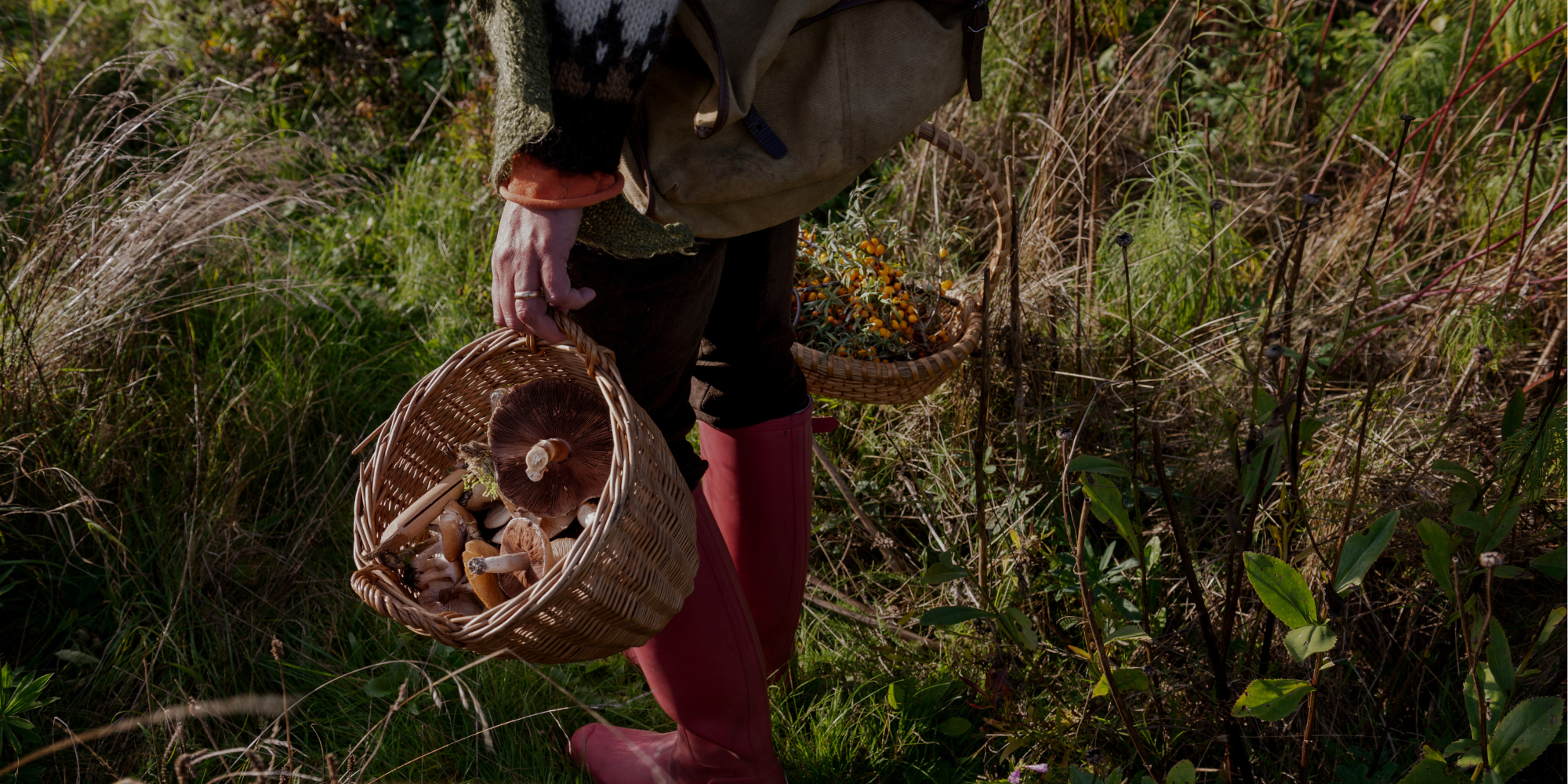

Autumn in New Hampshire is often painted in a palette of goldenrod and crimson, a time of abundance where sumac berries, nuts, late mushrooms, and roots mark the shifting of seasons. It’s usually one of the most fruitful times to forage- if you know what to look for.
But this year is different.
After months of too little rain, the forest feels… quieter. The moss isn’t quite as soft. The ferns are browning early. The usual flush of mushrooms is patchy and unpredictable. The landscape is asking us to notice.
In this entry, we’ll explore what you can still forage safely in autumn, how drought changes what’s available, and why it’s important to become students of the land- not just gatherers.
In this Entry:
- What You Might Find in an Autumn Forage
- How Drought Impacts the Landscape
- What This Means for Foraging (Now and Later)
- How to Observe & Learn From the Land
- Final Thoughts on Reciprocity
WHAT YOU MIGHT FIND IN AN AUTUMN FORAGE


Even in a dry year, there is still so much to see- and sometimes, just as much to learn from what’s missing. Here are a few safe and common things to look for in a typical New Hampshire autumn (but with caution this year):
Goldenrod
- Typically blooming in abundance through September and into October. Flowers can be used in teas or salves.
- In drought years, flowers may be stunted or dry early. Look for pollinators to find the healthiest patches.
Acorns & Hickory Nuts
- Often falling by mid-autumn, and an important food source for both humans (if properly leached) and wildlife.
- Drought-stressed trees may drop nuts prematurely or skip mast years altogether.
Autumn Olives (Invasive, but Edible)
- Tiny tart red berries on silvery-leaved shrubs. Forage responsibly by collecting from invasives without spreading seeds.
- Tend to thrive in disturbed areas- even in dry years.
Late Mushrooms (Turkey Tail, Hen of the Woods, Puffballs)
- Normally abundant after fall rains, but scarce in drought years.
- Avoid mushroom foraging unless you’re extremely confident in ID and understand drought stress can alter their appearance.
Rose Hips & Hawthorn Berries
- Found on wild bushes and trees in late fall- high in vitamin C and a beautiful signal of the season.
- Drought may result in smaller fruit or uneven ripening.
HOW DROUGHT IMPACTS THE LANDSCAPE
This year’s drought hasn’t just changed what’s available to forage- it’s restructured the forest’s priorities.
In dry conditions:
- Trees enter early dormancy or drop leaves prematurely to conserve water.
- Wildflowers dry before setting seed, affecting next year’s growth.
- Fungal networks shrink or go dormant, limiting mushroom production.
- Roots stay shallow and brittle, sometimes dying off completely.
- Animals forage harder, shifting their usual food patterns.
And the effects don’t end with fall.
WHAT THIS MEANS FOR FORAGING (NOW & LATER)
A dry autumn doesn’t just impact what we gather today- it changes what may grow next year and the year after that.
Seed cycles are interrupted, leading to patchy spring growth.
Plant populations shift, with drought-tolerant species taking over.
Wildlife food shortages may increase animal stress, especially in late winter.
Mycorrhizal fungi decline, weakening tree and plant health over time.
When we forage, especially in times of stress, we need to think like caretakers- not consumers. It’s more important than ever to observe, ask questions, and harvest sparingly.


HOW TO OBSERVE & LEARN FROM THE LAND
This is a season to become watchers as much as gatherers.
Ask:
- What’s missing this year that was here last year?
- What’s blooming early? What’s finishing too soon?
- Where is moisture holding? What’s bone dry?
- Are animals behaving differently?
These questions don’t always have quick answers, but they help us tune into the real curriculum of the land: one of rhythm, resilience, and change.
FINAL THOUGHTS ON RECIPROCITY
Foraging in a drought year reminds us that the land is not an endless buffet. It has limits. It has needs.
This season may be less about what you take and more about what you notice. Maybe it's about collecting seeds to plant in the spring. Maybe it’s about learning to identify trees by bark, not fruit. Maybe it’s about sitting quietly in a dry meadow and listening.
Because foraging, at its heart, is not about what we gather...
It’s about how we belong.