


You're driving down a quiet country road when you see it.
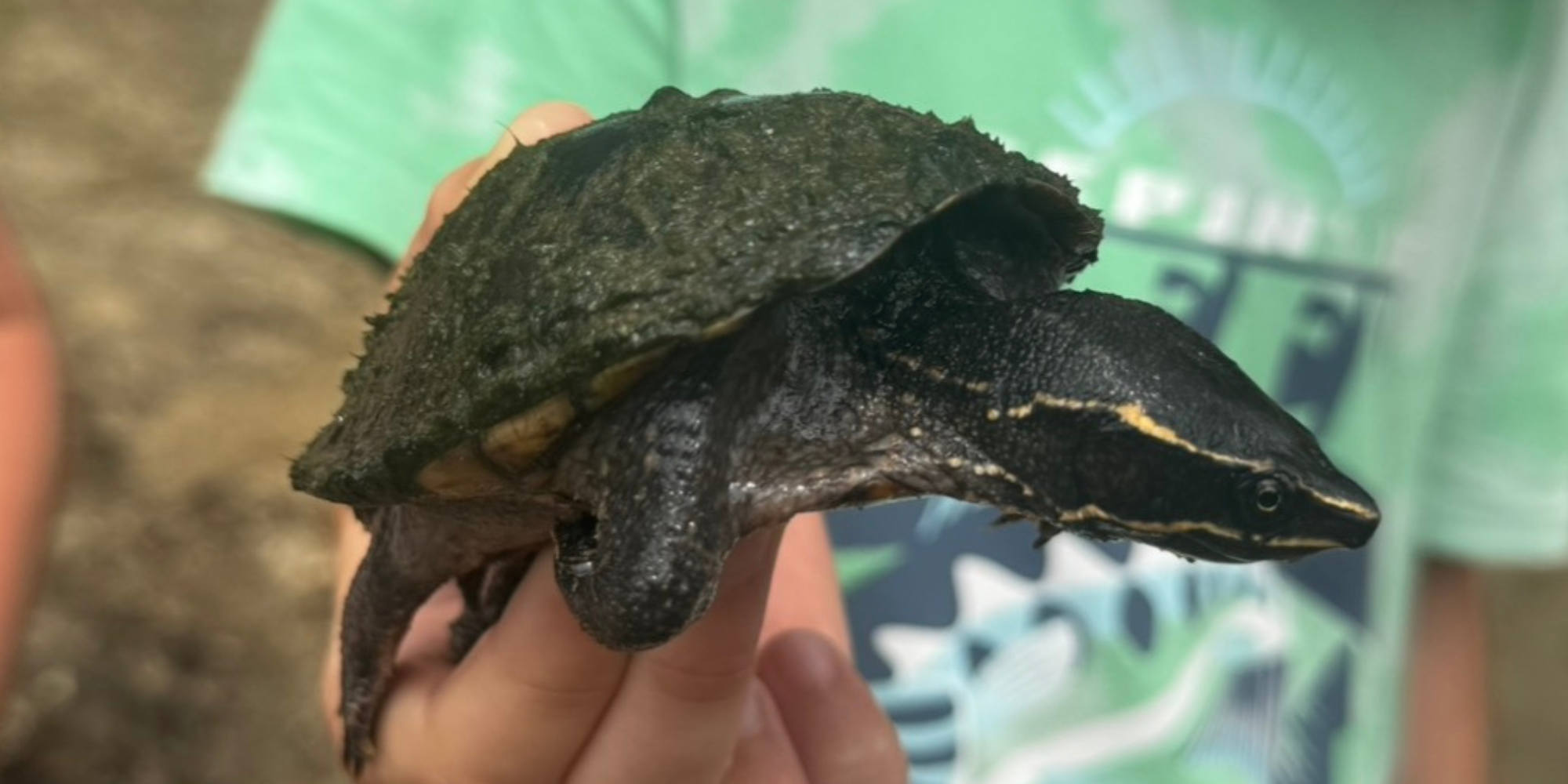
A turtle.
Maybe it's slowly making its way across the pavement. Maybe it's digging a nest beside the shoulder. Maybe it's simply basking in the warm sunshine.
Your first instinct is probably to help. And what a wonderful instinct! But knowing how to help can make all the difference.
Every year, well-meaning people accidentally put turtles at greater risk by moving them to a "better" pond, bringing them home as pets, or relocating them far from where they were found.
The truth is, the best way to help a turtle is almost always to help it remain wild.
In this Entry:
- Why Turtles Need Our Help
- How to Help a Turtle Cross the Road
- Why You Should Never Relocate a Turtle
- Can Turtles Really Find Their Way Home?
- Why You Should Never Keep a Wild Turtle
- Can Turtles Feel Their Shells?
- Appreciating Turtles Without Taking Them Home
WHY TURTLES NEED OUR HELP


Turtles have survived on Earth for more than 220 million years. They shared the planet with dinosaurs. They survived mass extinctions.
And yet today, many turtle populations are declining.
Road mortality, habitat fragmentation (when roads, buildings, and development break up natural habitats into smaller, isolated pieces), pollution, nest predation, and collection for the pet trade have become some of their greatest challenges.
Many turtle species also mature incredibly slowly. Some don't begin reproducing until they're 10, 15, or even 20 years old.
That means losing even one adult turtle can have a significant impact on a local population.
HOW TO HELP A TURTLE CROSS THE ROAD
If you find a turtle crossing the road and it is safe for you to stop:
✔ Pull completely off the road in a safe area (it's most important that you stay safe!)
✔ Turn on your hazard lights if needed.
✔ Watch for traffic before approaching.
✔ Move the turtle in the direction it was already traveling.
Never turn it around.
It may seem like you're saving it from traffic by bringing it back where it came from, but turtles usually have a destination in mind. Female turtles may be searching for nesting sites. Others may be moving between wetlands or seasonal habitats.
Trust that they know where they're going.
"What about snapping turtles?"
Snapping turtles deserve a little extra respect- and a little extra space.
Like other turtles, they're often crossing roads in search of nesting sites, water, or seasonal habitat. If it's safe to help one, remember that your safety comes first.
Never pick up a snapping turtle by its tail. Although this was once commonly recommended, it can injure the turtle's spine and tail.
If the turtle is small enough that you can safely manage it, you can gently grasp the back portion of the shell, keeping your hands well away from its long neck. A snapping turtle can stretch surprisingly far, so always keep your body behind the midpoint of the shell.
For larger turtles, it's often safest to encourage them onto a sturdy shovel, snow shovel, car floor mat, or thick piece of plywood, then carefully move them across the road in the direction they were already traveling. Some people also use a broom or other object to gently guide the turtle while staying out of reach.
If traffic is light and the turtle isn't in immediate danger, it's perfectly okay to simply stand nearby (from a safe distance) and allow it to finish crossing on its own.
Remember, the goal is to help the turtle- not to put yourself at risk.
WHY YOU SHOULD NEVER RELOCATE A TURTLE
One of the biggest myths is that turtles are happier if you move them to a "better" pond or prettier lake. In reality, this can be devastating.
Many turtles spend their entire lives within a relatively small home range, learning where to find food, where to bask, where to hibernate, and where to lay their eggs.
When moved to an unfamiliar location, they don't simply settle into their new home. Instead, they often spend weeks (or even months!) trying to return.
Some travel astonishing distances. Many cross multiple roads during these attempts. Others never find suitable habitat at all.
A turtle that seemed "rescued" may actually be placed in even greater danger.
Unless the turtle is in immediate danger, the best place for it is where it already lives.


CAN TURTLES REALLY FIND THEIR WAY HOME?
Scientists are still studying exactly how turtles navigate, but research has shown that many species possess remarkable homing abilities.
Some appear to use a combination of:
- Landmarks
- The position of the sun
- Earth's magnetic field
- Familiar scents
- Spatial memory
Whatever the mechanism, one thing is clear:
They know their home. And they work incredibly hard to return to it.
Of Interest: How to Build Your Own Wormery!
WHY YOU SHOULD NEVER KEEP A WILD TURTLE
Years ago, it wasn't uncommon for people to keep wild turtles in their yards. Some people even drilled holes through the edge of a turtle's shell and tied it to a tree or clothesline so it couldn't wander away.
Today we know just how heartbreaking that practice truly was. A turtle's shell isn't like a backpack it carries. It is part of the turtle. The shell is made of bone and is fused to the turtle's spine and ribs. It contains blood vessels and nerves. Turtles can absolutely feel their shells. Injuring the shell is much like injuring any other part of the body.
Beyond the physical harm, removing a turtle from the wild means taking it away from the only home it has ever known. Wild turtles rarely thrive as pets. Many become stressed, stop eating, or suffer from improper care. The greatest gift we can give them is to let them remain wild.
APPRECIATING TURTLES WITHOUT BRINGING THEM HOME
Instead of bringing a turtle home...
Take a photograph.
Sketch it in your nature journal.
Record the date and location.
Notice what species it is.
Observe what it was doing.
Share your excitement with others.
Those memories will last much longer than a turtle kept in a backyard ever could.
Every turtle you encounter is carrying a story. Some are older than your children. Some may have returned to the same nesting area every spring for decades. Some have crossed that same stretch of forest more times than we could ever imagine.
When we help a turtle safely across the road (or simply leave it where it belongs) we become a small part of that story. The greatest kindness we can offer isn't to make a turtle ours. It's to help it remain exactly what it has always been:
Wild.